June 19, 2026
What a drywall contractor does not do is often just as important as understanding what they are hired to complete. Many project delays, change orders, and scheduling issues occur because responsibilities between trades are assumed rather than clearly assigned. Truerock Interior helps residential and commercial clients understand where drywall scope begins, where it ends, and which tasks must be completed by other trades before drywall work can proceed.
Drywall is installed after several other construction activities have been completed inside wall and ceiling assemblies. When responsibilities are unclear, work may stop while missing tasks are corrected, inspected, or reassigned.
A common example is discovering incomplete electrical work after drywall installation has already started. The drywall may need to be removed to provide access, creating additional labour, material costs, and schedule disruptions. Similar issues can occur when framing deficiencies, insulation gaps, or unfinished mechanical systems are identified too late.
Clear scope definitions reduce the risk of trades waiting on each other and help ensure each phase of construction is completed in the correct sequence.
Drywall contractors focus on preparing wall and ceiling surfaces for their intended finish while working within the scope defined by project plans, specifications, and contracts.
A drywall contractor is typically responsible for installing drywall board, completing taping and joint treatment, applying finishing compounds, and preparing surfaces for paint or other finishes.
Depending on the project, drywall contractors may also complete texture applications, repairs, patching, bulkheads, shaft walls, specialty drywall assemblies, and finishing work required by project specifications. Truerock Interior also provides taping and texture services for residential and commercial projects.
The specific scope depends on the contract and project requirements. Some projects include only board installation, while others include complete finishing packages.
Drywall contractors regularly coordinate with framing, electrical, plumbing, mechanical, insulation, and general contracting teams. Coordination does not mean responsibility for completing another trade’s work.
The purpose of coordination is to confirm that required work has been completed before walls and ceilings are enclosed. If deficiencies are identified, the responsible trade typically addresses them before drywall installation proceeds.
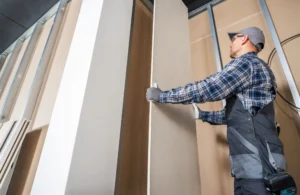
While project scope varies, several responsibilities commonly fall outside standard drywall contracts.
Drywall contractors do not typically perform structural engineering, load-bearing modifications, or major framing corrections. If wall alignment, framing stability, structural deficiencies, or load-bearing concerns are discovered, those issues are generally addressed by the framing contractor, structural contractor, or engineer responsible for the work.
Some contractors provide both drywall and framing services. For example, Truerock Interior also performs steel stud framing on projects where that scope is specifically included.
Drywall contractors do not normally install wiring, electrical devices, plumbing systems, HVAC equipment, ductwork, piping, or mechanical components.
These systems must typically be installed, tested, and approved before drywall installation begins. If electrical, plumbing, or mechanical work remains incomplete, drywall schedules may need to be adjusted until those trades finish their scope.
Drywall contractors may cut openings or work around installed systems, but that does not transfer responsibility for the systems themselves.
Insulation and vapor barrier work are often completed before drywall installation. Unless specifically included within the contract, drywall contractors are generally not responsible for supplying or installing insulation products.
If insulation deficiencies, missing sections, or vapor barrier issues are identified before drywall installation, they are usually corrected by the insulation contractor or responsible trade before wall assemblies are closed.
Truerock Interior also provides insulation services when insulation scope is included as part of a project.
Many drywall contractors do not install suspended T-bar ceiling systems, specialty acoustic ceilings, decorative ceiling systems, or manufacturer-specific ceiling products unless they offer those services directly.
Because ceiling systems vary significantly between projects, scope should always be confirmed before construction begins.
Truerock Interior also installs commercial ceiling systems when those requirements are included within the project scope.
Scope gaps often appear when assumptions replace documented responsibilities. The larger and more complex the project becomes, the more important clear trade coordination becomes.
Renovation projects frequently uncover hidden conditions after demolition. Existing framing defects, water damage, structural movement, missing insulation, outdated wiring, and previous repairs may not be fully visible during planning.
When these conditions are discovered, additional trades may need to complete corrective work before drywall installation can continue.
Commercial projects often involve multiple subcontractors working within the same schedule. Electrical, HVAC, plumbing, framing, fire stopping, insulation, and drywall activities must be completed in the proper sequence.
If one trade falls behind schedule or leaves incomplete work, downstream trades can experience delays that affect project timelines.
Scope misunderstandings often occur when project owners assume a contractor will handle work that was never included in the contract.
Examples include expecting framing corrections, insulation installation, electrical modifications, or specialty ceiling work to be included within drywall pricing. Reviewing scope documents before work begins helps prevent these misunderstandings.
Most scope disputes occur because responsibilities are assumed rather than documented. Before drywall work begins, project teams should confirm the following items to reduce the risk of delays, rework, and unexpected costs.
Completing these reviews before drywall installation begins helps ensure all trades understand their responsibilities and reduces the likelihood of work being delayed by unresolved scope issues.
Successful drywall projects depend on clear communication between trades before installation begins. Truerock Interior reviews project scope, coordinates with other contractors, and verifies that prerequisite work has been completed before drywall installation proceeds.
Because Truerock Interior provides drywall, steel stud framing, insulation, ceilings, and finishing services, project teams can often reduce coordination challenges by consolidating related scopes under one contractor where appropriate. Clear scope definitions, documented responsibilities, and early coordination help prevent avoidable delays, rework, and project disruptions.
